
Technology, Digital Platforms & Services Innovation Case Studies

A Playbook for Global Collaborative Innovation at Scale
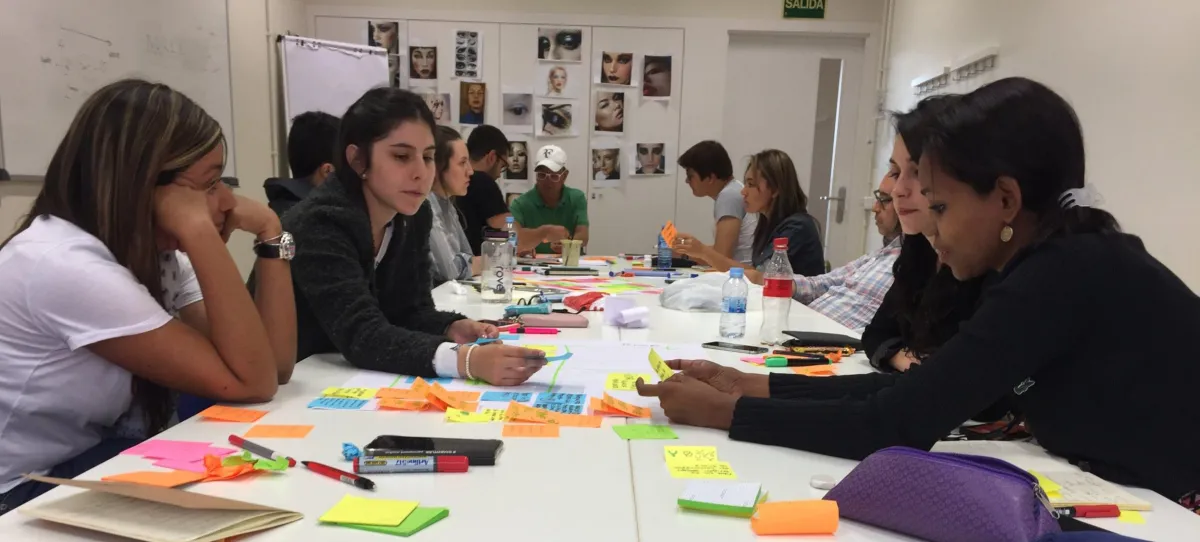
OpenIDEO had a hidden barrier. It looked open, but it was only truly usable if you already understood design thinking. People with zero prior experience did not know what was expected of them, how to structure their contribution, or how to move from a good intention to a useful output inside a time-boxed global challenge.
IDEO wanted to change that. The goal was to make OpenIDEO a global, accessible design methodology that works on real-world challenges, so strangers around the world could collaborate and produce outcomes without needing a design background. The ambition was simple: make it usable enough that even kids could pick it up and contribute.
Over 12 months, working remotely, we helped turn that ambition into a practical system. We built a step-by-step playbook embedded into the challenge flow, and paired it with templates and examples that showed what “good” looks like at each stage. This reduced the intimidation factor and removed the guesswork. People did not need to be designers to participate. They just needed to follow a clear sequence.
The outcome was what OpenIDEO needed to be all along. More beginners could contribute confidently without prior design training, and the challenges produced more usable real-world outputs because participants were guided toward clearer thinking and better submissions, not just more submissions.
Transform your team
Our unique "Know-The-Customer" (KTC) programme that embeds consumer psychology, advanced interviewing and insights decoding skills throughout your next sprint or project, so your team produces decision-grade customer evidence leaders can align around.
If you’re trying to level up a team, this is your next step.

Habits Designed Like Systems, Not Goals
NASA engineers do not need motivation. They need cognitive space. When routines are inconsistent, small steps get missed, rework creeps in, and mental bandwidth gets eaten by remembering what should be automatic.
Over 2 weeks, we worked remotely as habits coaches to help engineers design and install their own habits. This was not a one-off training. We started with the foundations of how habits form and how to design them, then moved into daily execution. Each day we sent clear instructions, they applied them to their own habit, and fed back what worked and what did not. We then adjusted the habit design in real time until it became easy to run.
The outcome was practical. Engineers built their own habits and found the methodology straightforward to implement as part of their daily routines. The point was simple. When the habit is designed properly, it stops relying on willpower and starts freeing attention for specialist work.


Turning Managers Into Innovation Operators - India
Designit (Wipro) | Wipro brought us in to train Wipro middle management on customer discovery and modern innovation processes, across four cities in India: Hyderabad, Pune, Bangalore, and Chennai. The real challenge was not awareness. It was integration. New innovation methods often die the moment they hit established engineering processes.
Over 1 month, we delivered a practical innovation process and made it usable through live practice and feedback. This was not theory. Managers worked through real scenarios, learned how to run innovation cycles without breaking delivery, and pressure-tested how decision gates and learning loops fit inside Wipro’s existing ways of working.
The outcome was clear. Middle managers could integrate newer innovation processes into their engineering workflows, and plan innovation projects more effectively with their teams. In other words, innovation stopped being “a separate thing” and became something they could actually run.

Transform your team
Our unique "Know-The-Customer" (KTC) programme that embeds consumer psychology, advanced interviewing and insights decoding skills throughout your next sprint or project, so your team produces decision-grade customer evidence leaders can align around.
If you’re trying to level up a team, this is your next step.

When Adoption Is the KPI, Guesswork Is the Enemy - UK
Vizzy had the classic scale-up problem. Build fast, then pay for it later in adoption and rework. They wanted to improve adoption of their digital offering while reducing the costly loop of shipping, learning too late, and rebuilding.
Over 3 months in the UK, we ran end-to-end discovery across both sides of the platform: employers and HR on one side, candidates on the other. We combined interviews with journey mapping, data review, and stakeholder alignment workshops to surface what was actually driving adoption, where friction was killing momentum, and what the product team was over-investing in.
Then we turned insight into decisions. We created a prioritisation approach that translated adoption drivers into a reordered roadmap, supported by concepts and prototypes that could be pressure-tested before committing to build.
The outcome was clear and practical. Vizzy left with a prioritised roadmap tied directly to adoption, and a more evidence-led way of making product decisions that reduced rework and helped the offering land better with both employers and candidates.

Raising the Quality Bar Across a Global Innovation Consultancy - Global
DMI is a global innovation consultancy. The real risk in organisations like that is not ambition. It is inconsistency. When teams across regions define “good” differently, quality becomes luck, delivery becomes uneven, and clients feel it.
Based in Barcelona, we led global teams across digital design, service design, strategy, and research (from Spain and the UK to India and Cambodia) with a clear mandate: raise consistency and make outcomes predictable. The core change was setting a higher, clearer quality bar. Not more templates for the sake of it, but shared expectations that made it obvious what strong work looks like, no matter who delivers it.
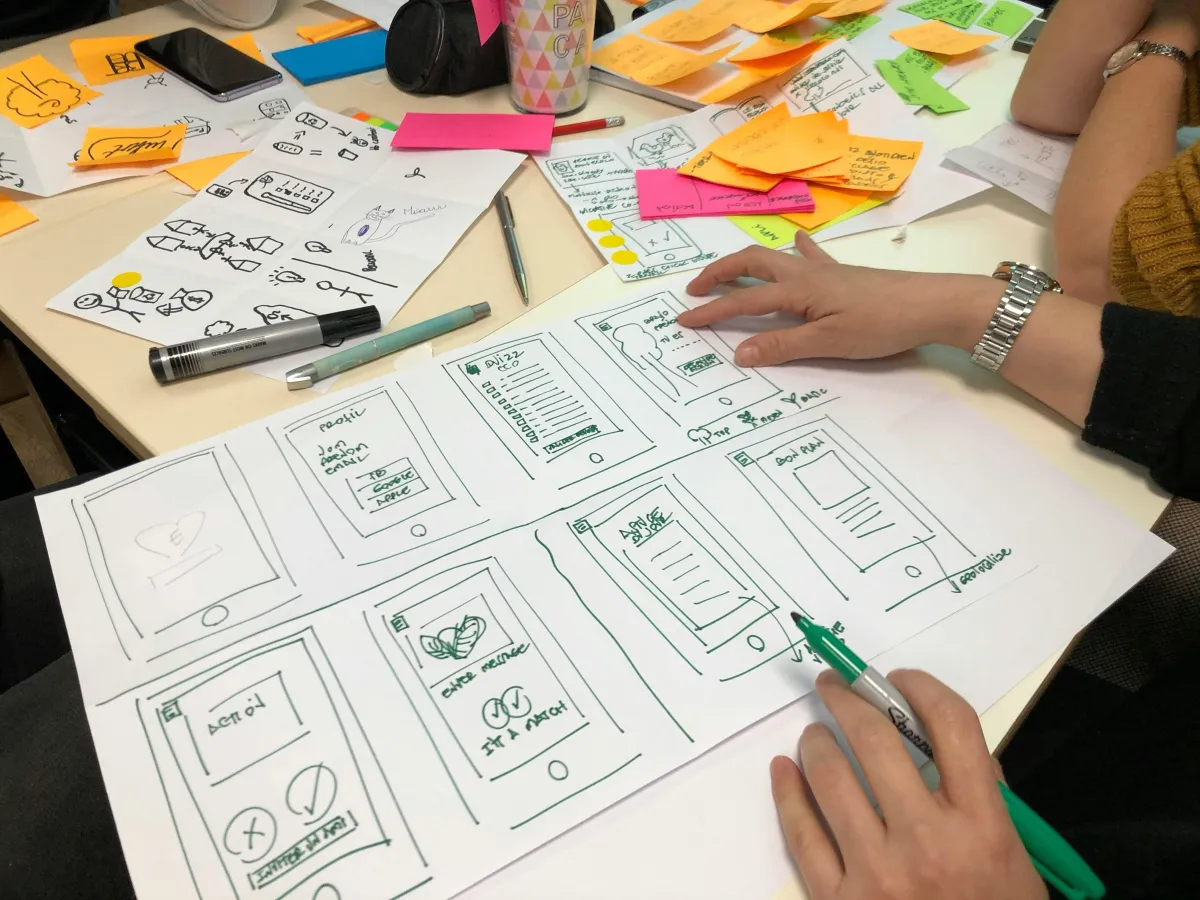
In practice, that meant repeatedly turning complexity into the outputs clients actually need to move. Reframed problem statements with success criteria. Opportunity maps that translate insight into choices. North star visions that align stakeholders. Journeys and service blueprints that expose the real system. Prototypes that make risk visible early. Roadmaps and implementation plans that stop strategy dying in a deck.
We also supported global sales teams by sharpening how opportunities were framed and how outcomes were articulated, so commercial conversations were grounded in clarity rather than hype. The result was not a new “innovation theatre” layer. It was stronger, more consistent client work and a global organisation that could deliver at a higher standard, repeatedly.
Transform your team
Our unique "Know-The-Customer" (KTC) programme that embeds consumer psychology, advanced interviewing and insights decoding skills throughout your next sprint or project, so your team produces decision-grade customer evidence leaders can align around.
If you’re trying to level up a team, this is your next step.
“It’s not what they drive that counts but what drives them.”
Gary van Broekhoven
Copyrights 2026 | WhatDrivesThem™ | Terms & Conditions