
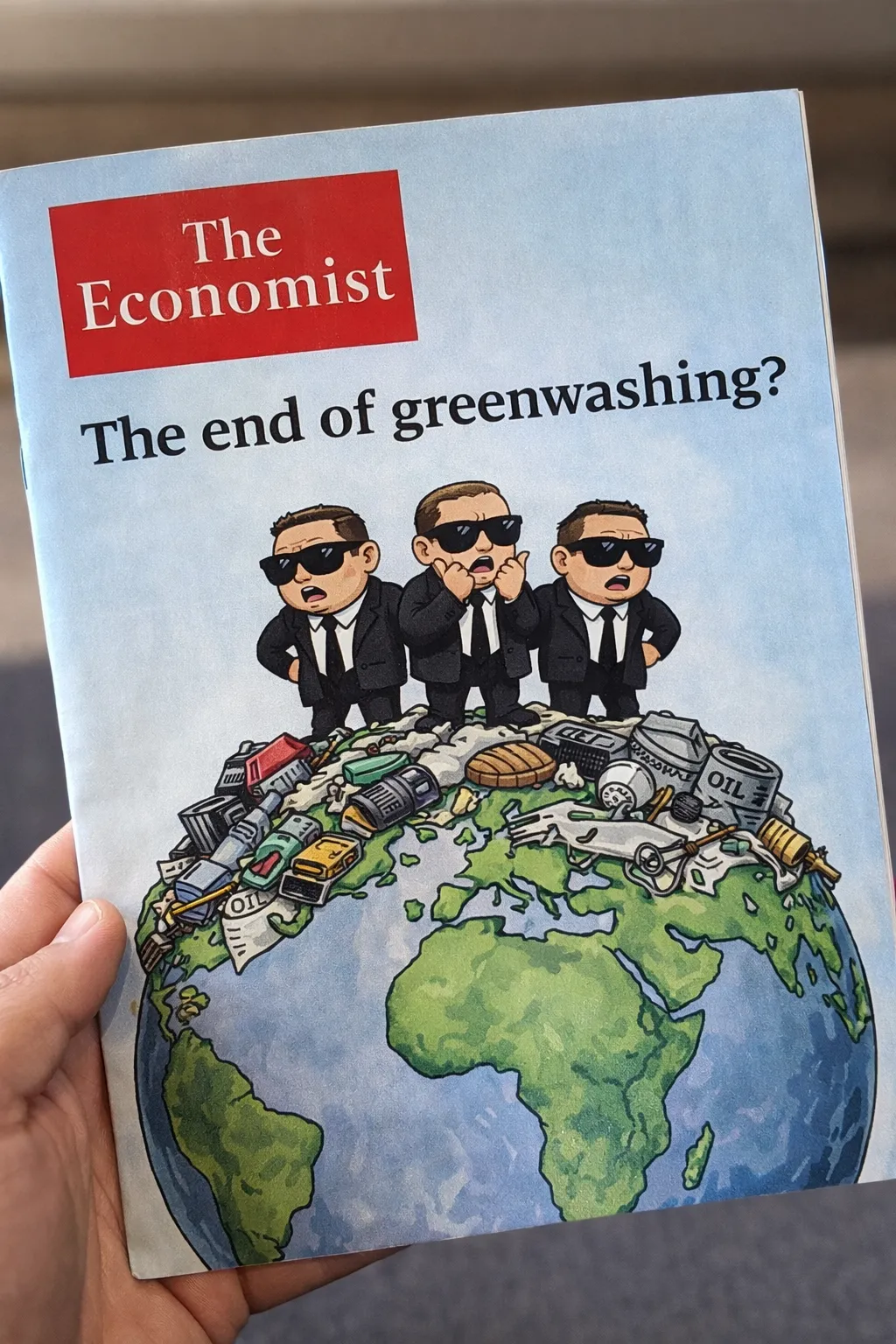
Greenwashing Broke Trust. Here's How Brands Can Rebuild It.
For the last decade, brands have been caught between two contradictions. They want to claim sustainability credentials. Their customers want to believe them. But trust keeps breaking because the difference between what companies say they are doing and what they are actually doing is so visible that it becomes the story itself.
You have seen this pattern. A high street fashion brand commits to net zero by 2030 and releases a sustainability report. Three months later, it launches another collection with 400 new styles. An energy company plants trees in a PR campaign while fighting climate policy behind closed doors. A consumer goods business announces a circular economy initiative then fires half the team that was supposed to build it.
The greenwashing is not always cynical. Many organisations genuinely want to change. But the gap between intent and action is so wide that it reads as dishonesty. The behaviour design problem is the same as the trust problem.
This is why behavioural design matters for sustainability. It is not about making people feel better about their choices. It is about designing the organisation in a way that makes sustainable action actually easier than unsustainable action. That is what rebuilds trust.
Make the Commitment Operational, Not Rhetorical
When a company commits to sustainability, it usually means communications speak about it. Marketing highlights it. The leadership team makes statements about it. But inside the organisation, nothing structurally changes. The incentive systems still reward speed and volume. The procurement process still picks the cheapest supplier. The product roadmap still prioritises new features over durability.
The rebuild starts here. Do not write a sustainability vision. Build sustainability into the operating system. Make the sustainable choice the default in three critical decision points. If you are in FMCG, change what gets into the briefing pack for new product development. If you are in fashion, change what metrics the design team is measured against. If you are in energy, change what the procurement team is allowed to bid on.
This is not symbolism. This is real change. People inside your organisation will notice. Your competitors will notice. Your customers will notice because the actual product changes, not the messaging.
Move the Incentives Together
When you move one incentive system, you have to move the others with it. If the design team is told to reduce packaging but the supply chain team is still incentivised on cost, you create friction. The organisation becomes a place where different teams are working against each other. That becomes visible to customers. They feel the contradiction in the product itself.
The counterintuitive move is to make sustainability less negotiable, not more. Organisations that have rebuilt trust around sustainability are usually the ones that stopped asking whether they could afford to do it and started asking whether they could afford not to. That shift in framing changes what decisions get made.
Connect Sustainability to a Problem Your Customers Already Care About
Customers do not wake up wanting to be sustainable. They wake up wanting to solve a problem. They want clothes that last. They want energy bills they can afford. They want products that work.
Most sustainability messaging starts with the planet. That is a harder sell. It starts with a problem that is abstract and distant and feels like it is someone else's job.
The rebuild works differently. You connect sustainability to something the customer already cares about and already experiences. If you are in fashion, you do not say "help us save the planet." You say "clothes that actually last longer means you spend less and own less." That is something someone cares about today, not in 2050.
If you are in energy, you do not lead with climate targets. You lead with "lower energy use means lower bills." The sustainability outcome follows from solving a problem the customer understands and experiences.
This is not greenwashing. This is honest. The customer gets something they want. The organisation gets the outcome it needs. Both move in the same direction.