How to design nudges that make sustainable choices the default inside your organisation
Most organisations think sustainability is a problem of knowledge. It is not. Your people know they should use the stairs instead of the lift. They know they should print double-sided. They know they should turn off the lights. What they do not know is how to make these choices automatic.
This is where nudges come in. But not the corporate wellness kind where someone sends an email reminding everyone to be more sustainable. Those do not work. What works is changing the structure so the sustainable choice becomes the obvious choice.
Choice Architecture, Not Choice Removal
Richard Thaler and Cass Sunstein call this "choice architecture". You do not remove choice. You make one choice so much easier that people pick it without thinking.
Take the office kitchen bin. If you put a recycling bin next to the regular bin, recycling rates jump. Not because people suddenly care more. But because they do not have to search for where things go. The sustainable option is visible. It is immediate. It is the path of least resistance.
This is the principle behind every nudge that actually works inside organisations.
Three Steps to Make It Work
You can do this with three steps.
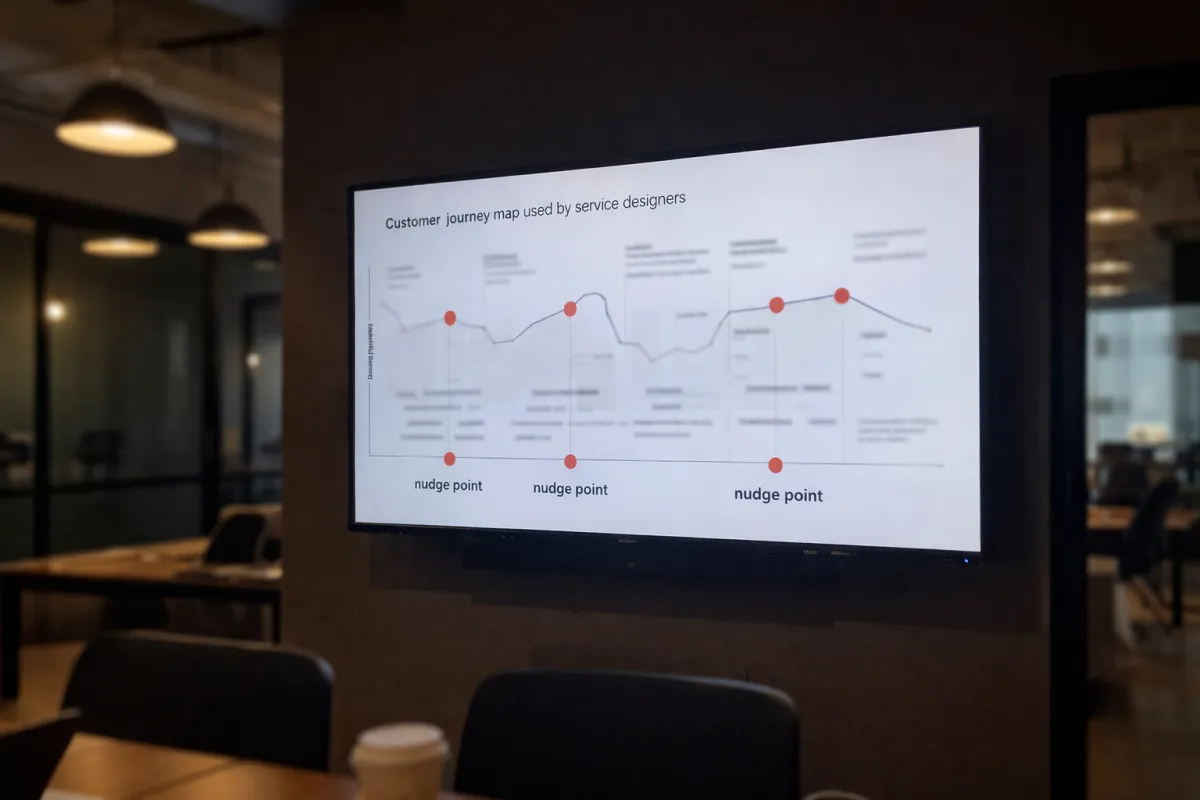
First, identify the moment where the unsustainable choice is easiest. Is it when someone opens their laptop and sees no reminder to turn it off? Is it when they need to book a meeting room and the only filter is availability, not sustainability? Is it when they order supplies and the sustainable option costs more and requires an extra click?
Second, remove friction from the sustainable choice at that exact moment. Put the energy-efficient rooms at the top of the booking list. Make sustainable suppliers the default option in the procurement tool. Add an auto-off timer to all company laptops so people do not have to remember.
Third, measure what happens. You cannot nudge in the dark. Track whether office waste sorted correctly went up. Track whether procurement actually chose the sustainable supplier. Track whether people are turning off their equipment.
Why This Works When Other Tactics Fail
Sustainable behaviour is not a motivation problem inside most organisations. It is a friction problem. People are not lazy. They are busy. They will pick the path of least resistance. Every single time.
When organisations send emails about sustainability, they add friction to the unsustainable choice. Read this. Care about this. Change your behaviour. That is work. Most people will not do it.
When you change the system so sustainable is easy, you remove the need to care. You remove the need to remember. You remove the need to have motivation. The choice just happens.
The Business Case That Changes Everything
The companies that have cracked this do not talk about their sustainability achievements because they are proud. They talk about them because the cost went down. Energy bills dropped. Waste disposal costs fell. Procurement saved money.
This is the insight that changes how sustainability gets funded inside organisations. When the CFO realises that making sustainable the default will save money, sustainability stops being a values project. It becomes a business project.
And that is when real behaviour change happens.
The default choice is always the choice that gets picked. Make it the sustainable one.