
The First 90 Days: What a New Head of Innovation Actually Does
The First 90 Days: What a New Head of Innovation Actually Does
You get the job. You're excited. You probably got sold a vision of what this role could be. You're going to transform the organisation. You're going to unlock innovation. You're going to create a culture of experimentation.
Then you show up on day one and realise nobody knows what you actually do.
I've watched this happen to enough new innovation leaders to see the pattern. And it's always the same. They spend the first 90 days making mistakes that damage them for the next three years.
Here's what actually happens in those first 90 days, and what you should actually do instead.
The Mistake: Trying to Lead From Day One
Most new innovation leaders arrive with a vision. A plan. A list of things they're going to change. And they start immediately. New processes. New platforms. New team structures. New ways of working.
By day 45, they've created enough change that some people are excited and some people are actively resisting. By day 90, they've picked a fight with someone powerful who didn't appreciate being told their innovation programme was broken.
Here's the truth: you don't have credibility yet. You don't understand the politics. You don't know which battles matter. And the organisation hasn't yet figured out if you're someone worth following.
Spending your credibility on day one is expensive.
What the First 90 Days Actually Looks Like
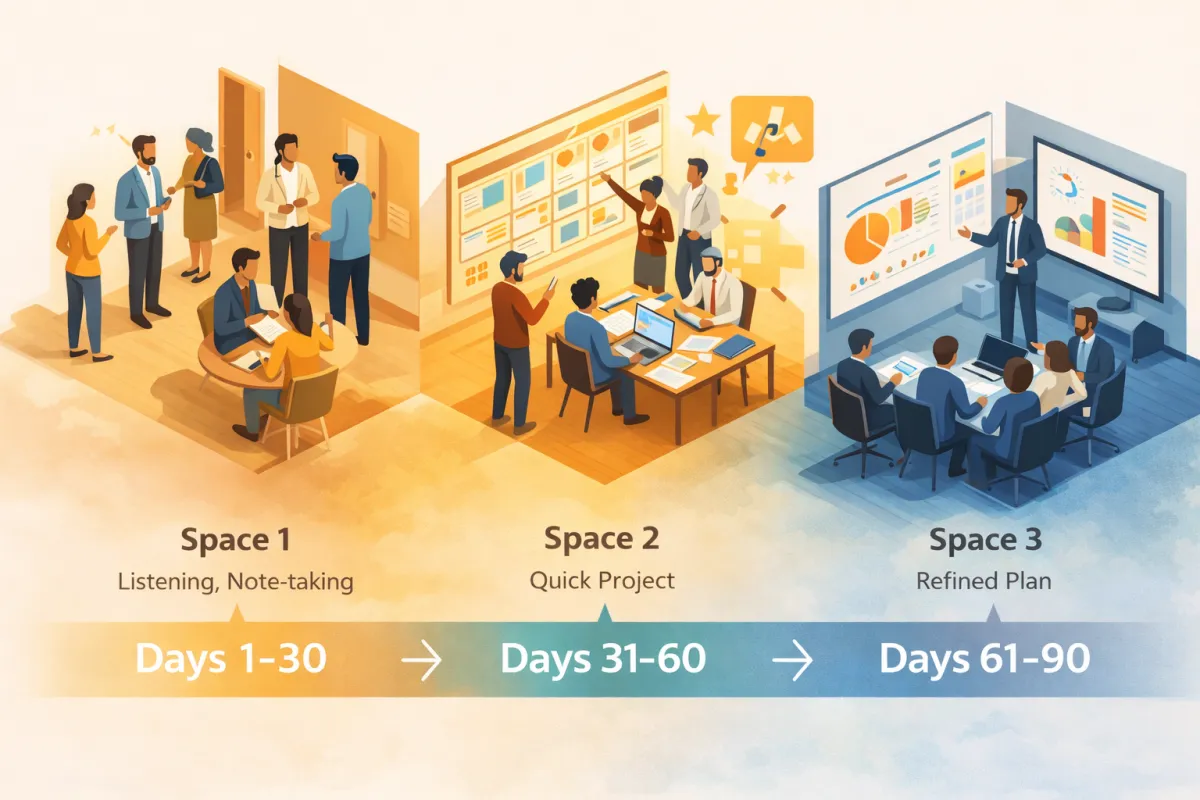
Phase One: The Listening Tour (Days 1-30)
You talk to people. Lots of people. Not in formal meetings. In corridors. At lunch. You ask one question over and over: "What's actually happening here?"
You're not selling your vision. You're not announcing changes. You're gathering intelligence. Who cares about innovation? Who's been burned by innovation initiatives? Who has power? Who influences without power? What's the biggest frustration people have with how innovation currently works?
You take notes. You don't make promises. You just listen.
By day 30, you have a map. You know the players. You know the fractures. You know where the energy is and where the resistance is.
Phase Two: The Quick Win (Days 31-60)
Now you pick one thing. One thing that's currently broken. Something people have already been complaining about. Something you can fix in 30 days without disrupting too many systems.
Maybe it's removing a bureaucratic approval layer from the idea submission process. Maybe it's creating a simple place for ideas to live instead of spreadsheets. Maybe it's scheduling a quarterly showcase so ideas get visibility.
Something visible. Something that takes a current friction point and removes it.
You run this like a small project. You get the team that needs to be involved. You move fast. You celebrate the win publicly. People start thinking, "Oh, maybe this person knows what they're doing."
Phase Three: The Plan (Days 61-90)
Now you have credibility. You've listened. You've shown you can move fast. You have a map of the organisation.
You draft your real plan. Not in isolation. With the people you've been talking to. The champions. The power brokers. The people who can either help you or block you.
You get their input. You shape your plan based on what you've learned. You make them stakeholders in the solution, not recipients of it.
By day 90, you have a plan that's informed by reality, that has support from the key players, and that you can actually execute.
What You Don't Do in the First 90 Days
You don't launch a new innovation platform. You don't reorganise the team. You don't announce a five-year vision. You don't make permanent decisions about people or process. You don't spend your political capital on things that matter more to you than to the organisation.
You gather. You listen. You fix one thing. You build relationships.
That sounds slow. It's not. It's the fastest way to actually create change because you're not wasting months fighting battles you didn't need to fight.
The Difference Between Busy and Effective
New leaders often confuse being busy with being effective. They take meetings. They send emails. They reorganise things. They feel productive.
The problem is that none of it sticks because you haven't yet understood what actually moves the organisation.
The first 90 days aren't about proving yourself through activity. They're about learning the system well enough that everything you do after day 90 works.
One Thing to Do This Week (If You're Starting a New Role)
Schedule 15 conversations. Not meetings. Conversations. Casual. Thirty minutes each. One question: "What's broken about how innovation works here right now?"
Listen for the themes. What problems come up again and again? Which one do you hear from the most unlikely people?
That's your day 30 quick win. Start designing it now.
---
The first 90 days aren't about leading change. They're about understanding the system so that the change you lead actually sticks.