
The Future of Sustainable Business Models: Beyond the ESG Checkbox
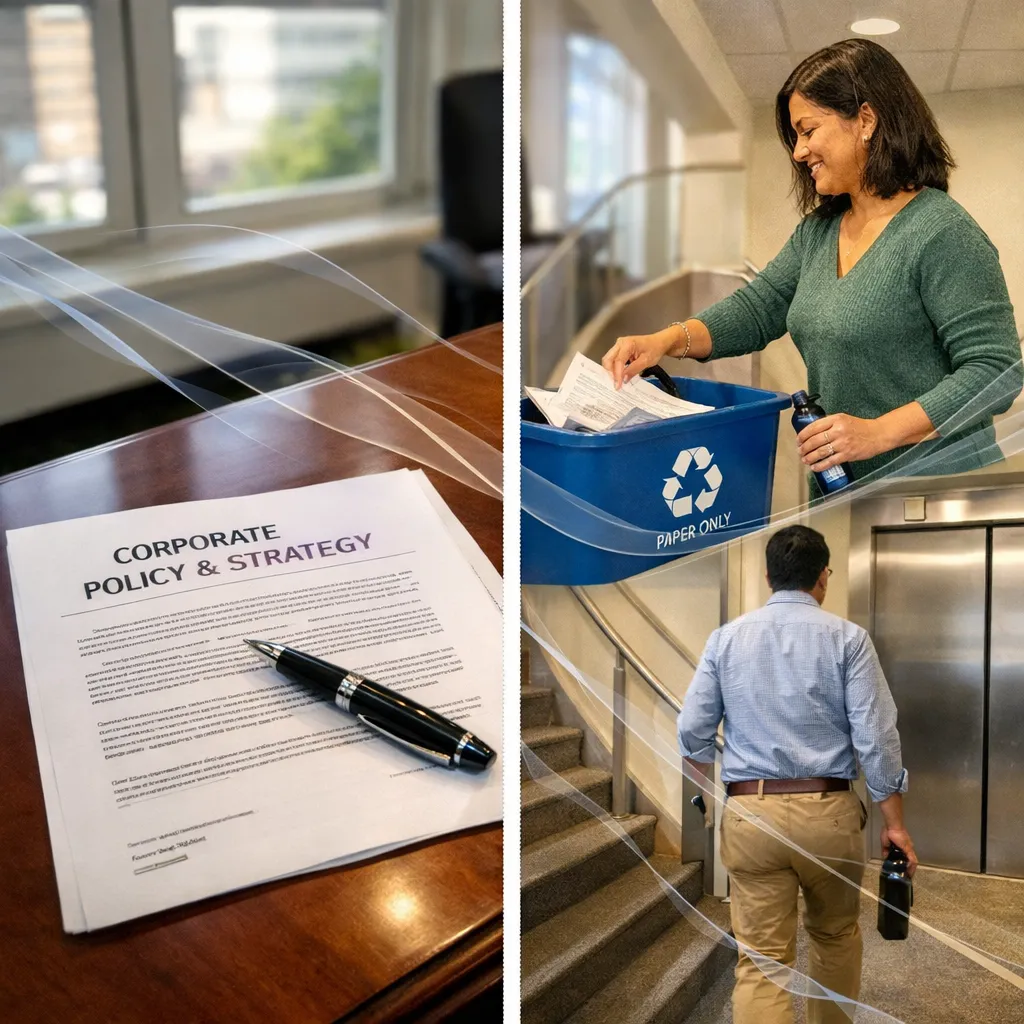
Every company I work with is building their sustainable business model. The investor presentations are slick. The commitments are real. The budgets exist. But when you dig into the actual operating model, you find something interesting. Most organisations are bolting sustainability onto an existing business model rather than rebuilding the model around it.
The ESG checkbox is the symptom. You report on emissions. You disclose your supply chain. You publish a sustainability appendix that nobody reads. None of it changes how the business actually makes money. The business model still rewards volume, speed, and short-term margin. Sustainability sits next to it as a parallel function, not an integrated one.
This is why so many sustainability commitments stall. The model itself was not designed for them.
Why Bolt-On Sustainability Fails
When sustainability is bolted on, three things happen.
First, it competes with everything else for budget. Every quarter the sustainability team has to justify its spend against the teams that drive revenue. They lose. Always. Because their metrics are slower, softer, and harder to defend in a quarterly review.
Second, it gets handled by a small group of specialists. The rest of the organisation hands them the problem and goes back to work. Sustainability becomes someone else's job. The product team designs without considering it. The supply chain team optimises for cost without considering it. The marketing team sells without considering it.
Third, it becomes a reporting exercise rather than a design exercise. The output is a document. The input is a spreadsheet. Nothing about how the business operates has changed.
What Integrated Looks Like
The companies that are actually changing have done something different. They have rebuilt the business model so that the sustainable choice is the profitable choice. Not as a trade-off. As the default.
Patagonia repairs clothes instead of selling new ones, and the repair business is now part of the core model. Interface, the carpet company, redesigned its product so the carpet itself is leased and returned for recycling. The customer pays for the use of carpet, not the ownership of it. The company makes more money keeping the materials in circulation than selling new ones.
These are not sustainability initiatives bolted onto a traditional model. They are the model. The unit economics work because of the sustainable choice, not despite it.
The Three Shifts That Move You There
Moving from bolt-on to integrated requires three shifts.
The first is rethinking what you sell. If you sell a product, you are incentivised to sell more of it. If you sell an outcome or a service, you are incentivised to make it last. Companies that have made the shift to selling outcomes find their incentives align with sustainability automatically. The light-as-a-service model. The mobility-as-a-service model. The carpet leasing model. In each case the business makes more money when the product lasts longer and uses fewer resources.
The second is rethinking your supply chain as a circular system. Most supply chains are linear. Materials come in, products go out, waste is someone else's problem. Circular supply chains close the loop. Materials come back. Products are designed for disassembly. The waste from one process is the input to another. This is not just an environmental win. It is a hedge against commodity price volatility and supply disruption.
The third is rethinking how you measure success. If your only metric is quarterly revenue, sustainability will always lose. The companies that have integrated it have added metrics that capture what the business is actually building. Customer lifetime value. Product longevity. Material recovery rates. Carbon intensity per unit of value delivered. These metrics make sustainability visible in the same conversations as revenue.
Why This Matters For The Next Five Years
The companies still treating sustainability as ESG reporting are going to struggle. Regulation is tightening. Capital is moving. Customers, especially younger ones, are choosing differently. The cost of inputs is becoming volatile in ways that make resilient supply chains a strategic advantage rather than a nice-to-have.
The companies that have integrated sustainability into the model are not just better positioned ethically. They are better positioned commercially. Their margins are more defensible. Their supply chains are more resilient. Their customer relationships are deeper. Their cost base is less exposed to the externalities they have already designed out.
This is not about doing the right thing instead of making money. It is about realising that the right thing and making money are the same thing once you redesign the model.
The future of sustainable business is not a checkbox. It is the model itself.