

When Product Owners and leadership know it's time to change.
Do you need a KTC Programme?
A 10-point diagnostic for product teams stuck in decision loops
If your roadmap meeting ends with “let’s park this” or “we’ll come back to it next week”, you’re not alone.
But you’re also not stuck because you lack data.
After 28 years designing and fixing programmes across industries, I’ve seen the same pattern on repeat: teams don’t get trapped by missing information. They get trapped by misaligned interpretation.
Everyone’s looking at the same customer signals.
Everyone’s telling a different story.
And when the story isn’t shared, decisions don’t stick.
They wobble. They get softened. They get reopened. Quietly. Endlessly.
That’s what a KTC (Know The Customer) Programme is for.
Not to collect more “insight”.
To create shared understanding of the customer’s why, using frameworks that reduce guesswork and rework.
TL;DR
If your team keeps reopening “decided” decisions, you’re leaking time through guesswork and rework.
KTC is a decision-clarity system, not a research project.
This post gives you a 10-point diagnostic to spot decision friction early.
You’ll leave with a 10-minute template you can use in your next roadmap meeting.
The goal: fewer debates that go nowhere, more decisions that stick.
The hidden cost nobody puts on a roadmap
Decision loops are expensive. Just not in the neat, spreadsheet-friendly way people love.
They show up as:
features rebuilt twice because “the first version didn’t land”
strategies that “evolve” every quarter because alignment never really arrived
teams politely agreeing in meetings, then executing different versions of the plan
customer research that’s interesting… but doesn’t change what you do next
Most teams respond by adding more:
more data, more dashboards, more workshops, more documentation.
But more doesn’t fix misalignment.
Frameworks do.
The 10-point diagnostic (score it)
Read the 10 points. Count how many are true for your team.
0–3: you’re mostly fine, you just need some tweaks
4–6: you’re bleeding time and talent in ways you’re not tracking
7–10: you’re in decision-loop territory, KTC will pay back fast
Decisions keep getting revisited
Not because anything truly changed. Because confidence never really landed.Meetings end in agreement, execution does not
Everyone nodded. Everyone left with a different interpretation.You have plenty of data, but no shared narrative
Dashboards look healthy. Research is happening. Everyone’s busy.
And yet, when it’s time to decide, the room fragments.Customer insight lives in slides, not in daily language
If teams can’t explain the customer in the same words, alignment is fragile.Different teams describe the same customer differently
Marketing, product, design, sales. Same customer. Four stories.Edge cases dominate core behaviour
Rare scenarios get more airtime than common patterns. That’s how roadmaps get weird.“Let’s test it” replaces choosing
Testing is healthy. Using experiments to avoid commitment is not.Strategy bends toward the loudest voice
Not the strongest evidence. The strongest opinion.New joiners struggle to understand why things exist
If the rationale doesn’t survive onboarding, it wasn’t clear enough.Rework feels normal
When rebuilding is accepted as “just how it goes”, something upstream is broken.
If you scored 4+, don’t panic. This is common.
Also, it’s fixable.
Why this keeps happening (and the fix I’ve seen work)
Here’s the thing most teams miss: the problem isn’t that you don’t talk to customers. It’s that you don’t have a shared way to interpret what you’re hearing.
Two people can watch the same customer struggle and walk away with different conclusions:
“They need more features.”
“They don’t trust us yet.”
“They don’t get it.”
“They’re just not our audience.”
All plausible. All incomplete.
Over the years, I found the most reliable fix wasn’t “more research”. It was giving teams a consistent decoding layer.
That’s why I started leveraging consumer psychology frameworks inside KTC.
Not to psychoanalyse customers.
To decode behaviour in a human, repeatable way: motivations, trade-offs, anxieties, shortcuts, trust signals.
Once interpretation becomes consistent, the story stops being subjective.
And when the story stops being subjective, decisions stop wobbling.
What a KTC Programme is (and why it works)
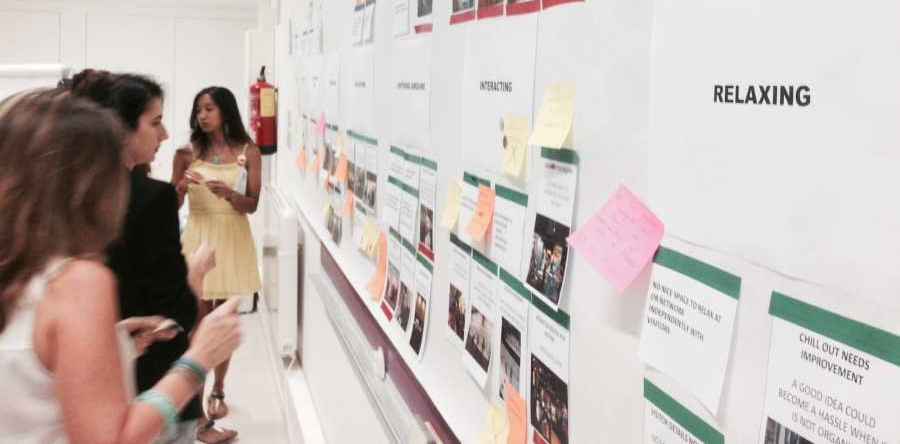
A KTC Programme is a repeatable way to turn customer understanding into decisions that stick.
At its best, KTC gives teams:
a shared language for customer behaviour
a consistent way to interpret what they hear
a clear narrative that travels across silos
the confidence to decide without guessing
The aim is simple: reduce guesswork, reduce rework.
Why bigger programmes rarely help
When teams feel stuck, they scale the wrong thing.
They add more interviews, more surveys, more tools, more documentation.
But the problem isn’t volume. It’s a signal.
You can drown in customer feedback and still be unclear, if you don’t have a consistent way to decode it.
That’s why I stand by this:
Most companies don’t need a bigger KTC programme, they need the right frameworks to reduce the guesswork and rework.
Frameworks make insight portable.
Portable insight creates alignment.
Alignment creates momentum.

The 10-minute KTC starting point (do this before you “start a programme”)
Try this in your next roadmap or prioritisation meeting.
Ask this question and sit with the silence:
“What would we need to understand about our customer to make this decision obvious?”
Then capture the answer using this template:
The decision (one sentence):
What are we choosing?The assumptions (bullet points):
What are we currently believing without proof?The evidence that would change our mind (one line per assumption):
What would we need to hear or observe for us to choose differently?
If you can’t answer #3, you don’t have an insight gap.
You have a decision clarity gap.
And that’s exactly where KTC begins.
If you have any questions about any of this, why not send me an email at [email protected] or
Book A Call and we can see where you’re at and see how to best help.